Special Session 6: What constitutes a good K-12 school in the AI era?
专题分会6:人工智能时代,什么样的中小学才算好学校?
As artificial intelligence rapidly reshapes how knowledge is accessed, created, and applied, the purpose, quality, and evaluation of K–12 schooling must be fundamentally re-examined.
This session explores how school quality can be defined, assessed, and continuously improved in the AI era, drawing on evaluation and certification frameworks, including work from the AI Future-Ready School Initiative. One such framework highlights six competency domains viewed as essential for AI-era education: empowered learning, social-emotional development, teamwork and communication, education and career navigation, innovative problem-solving, and AI digital literacy.
We invite researchers and educators to share empirical studies, conceptual frameworks, and case analyses addressing questions such as:
• Which core competencies should schools prioritize for an AI-driven future?
• How can AI enhance—rather than replace—human-centered learning, ethical judgment, and social-emotional development?
• What does effective AI integration look like at the whole-school level, from curriculum and teacher development to governance?
• How can future-ready schools be evaluated, recognized, and continuously improved—through quality indicators, readiness frameworks, and certification or accreditation approaches?
This session aims to advance shared standards and evidence-based evaluation frameworks that enable schools to move from fragmented AI programs toward coherent, evidence-based, and future-ready transformation beyond mere technology adoption.
Submission System: https://www.zmeeting.org/submission/icaie2026
Special Session Organizers


AI Future Ready School Initiative (www.aischools.top) is jointly launched by Accelerate Future Education, ACT Global Solutions, UNITAR Global SDGs and Leadership Development Center, and Artificial Intelligence International Institute. The initiative brings together expertise from international education communities and China’s basic education sector to respond to the evolving demands of education in the AI era. It draws on proven practices from future-oriented schools worldwide to identify and synthesize coherent frameworks for the systematic development of students’ core competencies.
The initiative provides evaluation, capacity-building, and co-creation services for K-12 schools that are both context-sensitive and internationally informed. It supports schools in strengthening institutional quality and coherence, and in fostering the holistic development of students’ core competencies essential for the AI era.
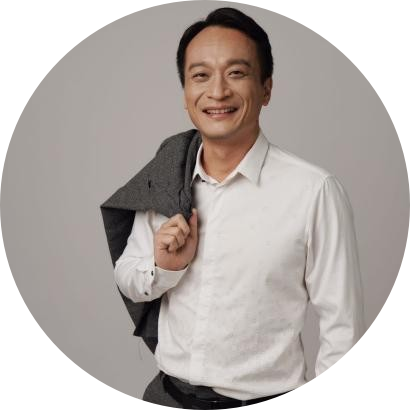
Ba Yuan
AI Future Ready School Initiative
Email: frankyb@afeact.com
Ba Yuan is the founder of the AI Future Ready School Initiative.
He serves as Chair of the International Schools Committee under the Guangdong Association for the Promotion of International Education, and as an Advisory Committee Member of the China International College Admission Counseling Center (ChinaICAC). He has over 20 years of experience as an international school principal and in senior leadership roles across the international education sector.

Ting Zhang
AI Future Ready School Initiative
Email: joy.zhang@afeact.com
Ting Zhang is a member of the working committee of the AI Future Ready School Initiative. She has extensive professional experience across the United States, Singapore, and China. Ting holds a bachelor’s degree in psychology and economics from the University of Pennsylvania and is a member of the International Honor Society in Psychology. Her undergraduate thesis was advised by Professor Angela Duckworth.
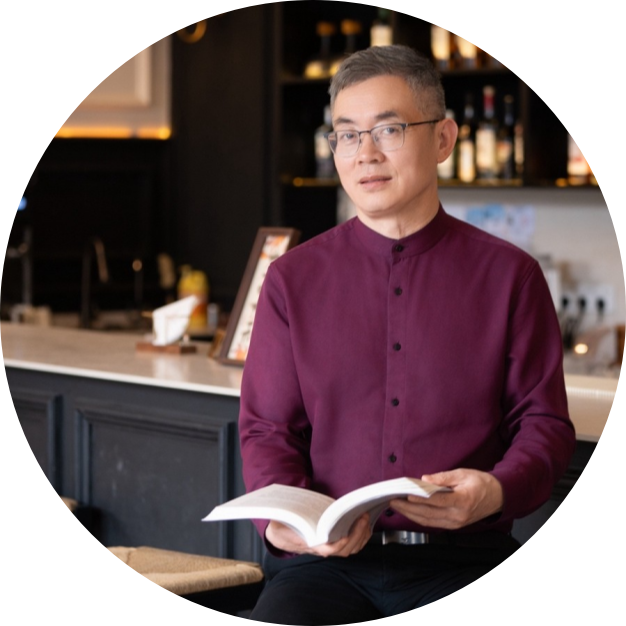
Dr. Changyun Kang
Beijing Normal University, China / Zhejiang University, China
Email: kangcy2003@hotmail.com
Research Areas: competency-based learning and future-oriented education
Dr. Changyun Kang is a Think Tank Member of the AI Future Ready School Initiative. He serves as Deputy Director of the China Institute for Education Innovation at Beijing Normal University and Chief Education Expert at the Intelligent Education Research Center of Zhejiang University. A pioneer in education reform and international education in China, Dr. Changyun Kang played a key role as an early organizer and coordinator in the initial phases of China’s Eighth National Basic Education Curriculum Reform.
Dr. Changyun Kang proposed the 5Cs Core Competency Model and the SERVE Model, which are frameworks that have contributed to advancing competency-based learning and future-oriented education practices. Dr. Changyun Kang co-authored influential education works including Entering the New Curriculum, and co-authored Learning with portfolios: A portfolio journey into Chinese reading and writing classrooms with Robert Tierney.
Dr. Wen Liao
South China Normal University, China
Email: 199142835@qq.com
Research Areas: future-ready schools
Dr. Wen Liao is an Advisor and Think Tank Member of the AI Future-Ready School Initiative.
Dr. Liao holds a PhD in Law and serves as a Master’s Supervisor and Assistant Researcher. He is the Director of the Future Learning Space Research Center, Faculty of Teacher Education, South China Normal University. He also serves as a member of the Labor Education Research Center at South China Normal University and as a member of the Expert Committee of the Future Schools Program under the School Development Planning Center of the Ministry of Education. In addition, Dr. Liao serves as Secretary-General of the Committee on Home–School–Community Collaborative Education of the Guangdong Society of Education, and as Chair of the Committee on Home–School–Community Co-education of the Guangdong Family Education Research Association.
His research focuses on future-ready schools and school transformation. His major achievements include one Second Prize of the National Teaching Achievement Award, one First Prize and two Second Prizes of the Provincial Teaching Achievement Awards. He has led one key project and one general project under Future Schools 2020, co-authored Development Guide 1.0 for Future Roadmap Experimental Schools, and published or co-published 23 books, including Toward the Future: A Handbook for Primary and Secondary School Teachers’ Competency Development and Toward the Future: A Handbook for Primary and Secondary School Head Teachers’ Competency Development.
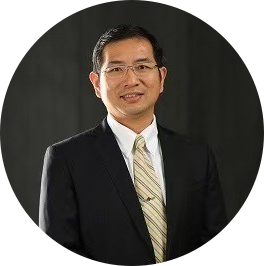
Dr. Yi-Lung Kuo
Hong Kong University of Science and Technology (Guangzhou) (HKUST(GZ)), China
Email: yilungkuo@hkust-gz.edu.cn
Research Areas: social and emotional learning, large-scale educational assessment, innovative assessment tools, gifted education, and teaching and learning in higher education, AI-supported learning and assessment
Dr. Yi-Lung Kuo is a Think Tank Member of the AI Future Ready School Initiative.
Dr. Kuo is an Associate Professor of Practice in Interdisciplinary Education in the Pillar of Cognitive Science at the College of Education Sciences, Research Fellow of Institute of Education Innovation and Practice, Hong Kong University of Science and Technology (Guangzhou) (HKUST(GZ)), and a former Head of the Department of Teaching Development. He received his Ph.D. in Educational Psychology from the University of Iowa. Before joining HKUST(GZ), he served as the Founding Director of the Centre for Teaching and Learning and Associate Professor of Applied Psychology at Beijing Normal–Hong Kong Baptist University (BNBU). He has also held faculty and research positions at Beijing Normal University and the Center for Talented Youth at Johns Hopkins University. Dr. Kuo’s research focuses on social and emotional learning, large-scale educational assessment, innovative assessment tools, gifted education, and teaching and learning in higher education, with growing interest in AI-supported learning and assessment. He has published over 50 academic papers and book chapters and presented at more than 100 international conferences. His honors include the BNBU President’s Award for Teaching and Service, Guangdong High-Level Talent recognition, and the Guangdong Philosophy and Social Science Outstanding Achievement Award.